AI for Beginners Roadmap: A Practical Way to Start
A clear, beginner-friendly AI roadmap for students, creators, freelancers, and professionals who want to learn AI step by step without feeling overwhelmed.
Starting with AI can feel exciting and confusing at the same time. One day you hear about ChatGPT, the next day someone is talking about AI agents, automation, prompt engineering, machine learning, and tools that seem to change every week. For a beginner, the biggest challenge is not lack of information. The real challenge is knowing what to learn first, what to ignore for now, and how to build confidence without getting lost in hype.
This AI for beginners roadmap is written for people who want a practical path. You may be a student, creator, freelancer, business owner, or working professional. You do not need to become a machine learning engineer on day one. You need to understand the basics, use AI in real tasks, build judgment, and slowly move toward more advanced skills if your goals require it.
What is an AI roadmap
An AI roadmap is a learning path that helps you move from basic understanding to practical use. Instead of randomly watching videos or testing every new tool, a roadmap gives you order. It tells you what foundation to build, which tools to try, what skills to practice, and how to apply AI in your own field.
The mistake many beginners make is trying to learn everything at once. They start with deep technical terms, then jump to paid tools, then try automation, then lose interest because nothing feels connected. A better approach is simple: understand what AI can do, use one tool well, practice prompts, apply it to real work, and then decide whether you want to go deeper into coding, automation, data, or business use cases.
Why it matters
AI matters because it is becoming part of daily work. It helps people write, research, summarize, plan, design, analyze, communicate, and automate repeated tasks. This does not mean AI will do everything perfectly. It means the person who knows how to use AI properly can move faster, think more clearly, and produce better first drafts than someone starting from zero every time.
For beginners in India, this is especially useful because AI can support many practical paths. A college student can use AI to learn faster. A creator can plan content more consistently. A freelancer can improve delivery speed. A small business owner can reduce repetitive communication. A professional can organize notes, reports, and presentations with less stress.
Step 1: Understand AI in simple language
Before learning tools, understand the idea. AI is software that can perform tasks that usually need human-like thinking, such as understanding language, finding patterns, creating text, generating images, or helping make decisions. It does not think like a human, and it can make mistakes. That is why your judgment still matters.
At this stage, do not worry about complex mathematics or advanced model architecture. Learn basic terms like artificial intelligence, machine learning, generative AI, large language model, prompt, automation, dataset, and AI agent. Once these words stop sounding strange, the rest of the learning journey becomes easier.
Step 2: Learn one AI tool properly
Pick one general AI assistant and use it every day for a week. Ask it to explain topics, rewrite text, summarize notes, plan a schedule, generate ideas, or structure a project. The goal is not to become dependent on it. The goal is to understand how AI responds, where it helps, and where you still need to check the answer.
- Use AI to summarize something you already understand
- Ask it to explain one difficult topic in simple words
- Create an outline for a blog, video, assignment, or presentation
- Rewrite your own paragraph in a clearer tone
- Compare the AI output with your own judgment before using it
Step 3: Learn prompt engineering basics
Prompt engineering simply means giving better instructions to AI. A weak prompt gives a weak result. A clear prompt gives a more useful result. Beginners should learn how to include context, goal, audience, format, tone, and examples in their prompts. You do not need fancy prompt formulas at the start. You need clarity.
For example, instead of asking, write a caption, you can say: write five Instagram captions for a beginner-friendly AI workshop in India, in a warm and confident tone, each under 20 words. That small difference gives the AI direction. This skill is useful for almost every AI tool.
Step 4: Apply AI to your field
The roadmap becomes valuable only when AI enters your real life. If you are a student, use it for revision notes, concept explanations, and project planning. If you are a creator, use it for hooks, scripts, captions, and repurposing ideas. If you are a freelancer, use it for research, proposals, client emails, and delivery systems. If you run a business, use it for FAQs, follow-ups, internal documents, and content planning.
Step 5: Build responsible habits
A good AI user does not blindly copy the first output. Always review facts, remove generic lines, add your own experience, and check whether the answer fits the situation. AI can sound confident even when it is wrong. That is why responsible use is part of the roadmap, not an optional extra.
Use cases
- Students can use AI for explanations, revision plans, and project outlines
- Creators can use AI for content ideas, scripts, and repurposing
- Freelancers can use AI for faster research, proposals, and drafts
- Professionals can use AI for emails, reports, summaries, and planning
- Business owners can use AI for customer replies, content, and workflows
Keep Exploring
If you want to go deeper after reading this article, these pages are worth exploring next.
Conclusion
The best AI roadmap for beginners is not complicated. Start with basic understanding, use one tool properly, learn how to write better prompts, apply AI to real tasks, and build responsible habits. Once you can do that, you can choose your next direction with more confidence. AI becomes less scary when you stop treating it like a mystery and start treating it like a practical skill.
Frequently Asked Questions
Can I learn AI without coding?
Yes. Beginners can start using AI tools, prompts, and workflows without coding. Coding becomes useful later if you want to build technical products, models, or advanced automations.
How long does it take to learn AI basics?
You can understand the basics in a few weeks if you practice consistently. Becoming advanced takes longer, but useful beginner-level AI skills can be built quickly through real tasks.
What should I learn first in AI?
Start with simple AI concepts, one general AI assistant, and basic prompt writing. After that, apply AI to your field before moving into advanced topics.
Related Blogs
Keep reading
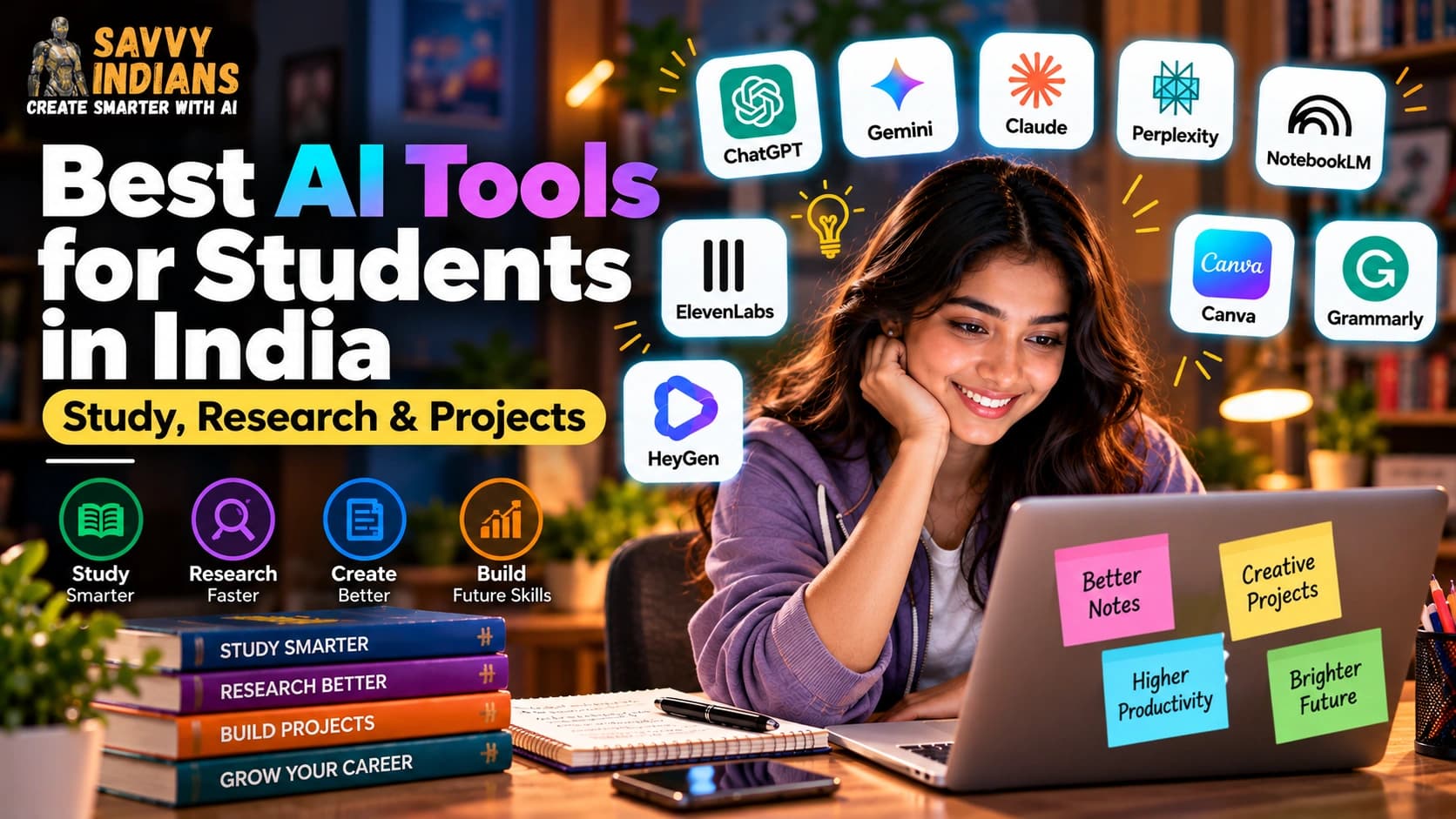
Best AI Tools for Students in India: Study, Research & Projects
Discover the best AI tools for students in India for studying, research, writing, presentations, video creation, and college projects.
Read this next
How Much Does AI Automation Cost in India? 2026 Pricing Guide
Wondering about AI automation cost in India? Explore 2026 pricing for AI automation, chatbots, n8n workflows, and automation agencies.
Read this next
Video Making Course: Learn to Create Professional Videos
Looking for a video making course in India? Learn shooting, editing, storytelling and video production with practical training.
Read this next